Silent Generation
Silent Generation is a Chicago-based cultural analysis podcast that surveys the cultural consequences of car-oriented development in the mid-20th century. It explores what was lost between the Silent Generation and Generation Z. Topics discussed include aesthetics, fashion, history, and urbanism.
Find us on Instagram: silent.generation










Episodes

Sep 16, 2024
Sep 16, 2024
1 hr 30 min
In a more anecdotal direction, this week’s episode is on American Summer camps. The boys detail how camping was first developed in 1861 by Frederick Gunn before discussing their own experiences as campers and counselors at American Summer camps. Amongst other things they discuss how modern Summer camps have felt the need to hyperspecialize and give parents an ROI, how Summer camp aesthetics are 1970’s by default, how Summer camps were depicted as WASPy in Addams Family Values, and how Summer camps were depicted as somewhat utopian in the 1964 Soviet film Welcome, or No Trespassing. This is the second installment of a three part series that explores interconnected topics that deal with American culture and the outdoors.
Links:
The Not So Happy Campers by Mimi Swartz
About our Founder - The Frederick Gunn School
Summer Camp Capitalism
The History of American Jewish Summer Camps
I can tell from her tweets that she had to go live with grandma for a lil bit meme
Wednesday’s revolt from The Addams Family Values
Long accused of Indigenous misappropriation, Boy Scouts ask if it’s time to change
Welcome, or No Trespassing (1964)
Artwork:
Photograph by Andy Sweet
Recorded on 9/15/2023
![Ep. 40: The Scouting Movement [TEASER]](https://pbcdn1.podbean.com/imglogo/ep-logo/pbblog17628020/Scouts1_fd7it7_300x300.jpg)
Sep 12, 2024
Sep 12, 2024
5 min
Full episode available on Patreon: https://www.patreon.com/SilentGeneration
Scouting is a grassroots, child-led movement that began in the early 1900’s after children discovered Robert Baden-Powell’s written accounts of his time working as a scout for the British Army. After learning of children’s interest in his work, Baden-Powell conducted an experimental scout camp at Brownsea Island in 1907 and subsequently published his seminal work Scouting for Boys in 1908. Dozens and hundreds of official scouting organizations followed, most of which still exist today.
On this week’s episode the boys detail the history of various figures and organizations in the scouting movement. Amongst other things they discuss how arbitrary it was that the scouting movement was inspired by scouting, how scout badges and scouting uniforms create an archive of people’s childhoods, how Cub Scouts truthfully don’t create their own pinewood derby cars, and how the TTI industry and wilderness therapy are “dark scouting.” This is the first installment of a three part series that explores interconnected topics that deal with American culture and the outdoors.
Links:
Scouting for Boys by Robert Baden-Powell
The Zoomer Question by Isaac Wilkes
Remembering the Wandervogel by John Savage & Johnny Ryan
David Hahn, The ‘Radioactive Boy Scout’ Who Tried To Build A Nuclear Reactor In His Backyard
Joseph as a Cub Scout
Nanook of the North (1922)
Scouts Honor: The Secret Files of The Boy Scouts of America (2023)
Artwork:
Scouts with canoe - National Parks Gallery
Creative Commons CC0 License
Recorded on 9/9/2024

Sep 5, 2024
Sep 5, 2024
1 hr 35 min
Why was Nathan in Rio de Janeiro last week? Why was he there in 2018? What did he do there? What new fruits did he try? These are some of the important questions Joseph asked Nathan on this week’s episode.
Links:
Brazil with a Z vs Brasil with an S - example 1
Brazil with a Z vs Brasil with an S - example 2
Artwork:
Picture of Rio de Janeiro taken by Nathan from Pão de Açúcar
Recorded on 9/2/2024

Aug 31, 2024
Aug 31, 2024
1 hr 26 min
How did the spy-fi literary and cinematic genre come to be? This week Joseph and Nathan chronicle how detective fiction authors took inspiration from sensational espionage cases such as The Dreyfus Affair and The Rosenberg Trial to imagine what the front lines of The Cold War might look like. The boys cover “realistic” spy movies such as James Bond’s Dr. No, Three Days of the Condor, and The Bourne Trilogy before going into fantastical depictions of spies in Children’s media like The Spy Kids, Kim Possible, and Charlie and the Chocolate Factory. Amongst other things they discuss the difference between state and industrial espionage, Austria’s constitutionally mandated status of neutrality, and Edward Snowden’s modeling portfolio.
Links:Nathan’s InstagramWas the Rosenberg trial America’s Dreyfus AffairThe Scarlet Pimpernel by Baroness OrczyThe Thirty-Nine Steps by Charles BuchanEp. 53: Bond Girl Summer by Nymphet AlumniPhotos from young Edward Snowden’s brief modeling careerTrying to Make Sense of Hannah Diamond and Post-Ringtone Music by VICEThe Real Life Spy Behind Charlie And The Chocolate FactoryChildren of undercover Russian spy couple only learned their nationality on flight to MoscowExclusive: Suspected Chinese spy targeted California politicians
Artwork:Sean Connery playing James Bond in From Russia With Love
Recorded on 8/16/2024
![Ep. 37: Male Desire w/ Charles Livingston [TEASER]](https://pbcdn1.podbean.com/imglogo/ep-logo/pbblog17628020/Male_Desire_mpbdj4_300x300.jpg)
Aug 15, 2024
Aug 15, 2024
5 min
Full episode available on Patreon: https://www.patreon.com/SilentGeneration
This week the boys are joined by local filmmaker Charles Livingston to discuss male desire. They begin by first discussing straight male desire (the derision of the male gaze, male jealousy and possessiveness, and gender performance) before going into a deep exploration of Nathan’s thesis that yearning is the most universal and inexorable difficulty experienced by gay men. Amongst other things they discuss how the Ancient Romans conflated sexual conquest with imperial conquest, how Cleopatra in Shakespeare's Antony and Cleopatra weaponized mens’ desire, and how straight men and gay men seem to equally match each other in terms of desire.
Links:
Charles Livingston’s Instagram
Wings by Charles Livingston
Oscars 2018: Facts and figures about the members of the Academy of Motion Picture Arts and Sciences - Orange County Register
The VICE Guide to Being Gay
Armond and Mark scene from the White Lotus
Artwork: Germanic Warrior with Helmet, Osmar Schindler, 1902
Recorded on 8/11/2024

Aug 9, 2024
Aug 9, 2024
1 hr 30 min
On this week’s (sans Joseph) episode of Silent Generation, Nathan is joined by his friend Kamara to discuss antiques. They talk about how they first got into antiques, the best antiques that they own, and the defining characteristics of several antique furniture styles (Victorian, Arts & Crafts Movement, Art Nouveau, Art Deco, and Mid-century Modern). Amongst other things they discuss how Victorian antiques and houses are construed as being haunted, how antiques seem to be most popular in rural areas, and how the antiques industry acts as a point of intergenerational exchange between different generations of gay men.
Links:
Antiques Pinterest Board (Nathan’s antiques are at the bottom)
A Lamp & Fixture Corp
Tighlman Chicago
Justanswer Antiques
The Blue Fairy Book edited by Andrew Lang
Campbell House Museum
The Slav Epic by Alphonse Mucha
THREATENED: Hector Guimard’s Art Nouveau Metra Entrance
Restor-A-Finish Youtube demo
The Roger Brown Study Collection
Artwork:
Art Deco Cubist Armchair in Vermilion Mohair Velvet and Maple, Belgium, 1920s
Recorded on 8/4/2024
![Ep. 35: Unions [TEASER]](https://pbcdn1.podbean.com/imglogo/ep-logo/pbblog17628020/Strike_pscxtx_300x300.jpg)
Aug 3, 2024
Aug 3, 2024
5 min
Full episode available on Patreon: https://www.patreon.com/SilentGeneration
This week the boys cover a listener suggested topic that is closely associated with their lines of work: unions. Nathan is currently a librarian represented by the American Federation of State, County and Municipal Employees (AFSCME), and Joseph works in the heavily unionized construction industry. Amongst other things they discuss how violent strikes were prior to the formation of the NLRB in 1935, how the Haymarket Affair lead to creation of the 8 hour work day, how YIMBYs feel ambivalent toward unions, and how unions mitigate but don’t eliminate the deleterious effects of monopolization.
Links:
How Chicago’s Past Resulted in Disproportionate Lead Poisoning of Minority Children of the Present: A Narrative Review
The Redneck Army Refuses to Stay Buried by Cassady Rosenblum
Ep. 164: Labor Union Depictions in Hollywood by Citations Needed
Ten cities facing the worst of the pension crisis
CTA has only netted 4 rail operators this year Reddit post
Noisy and Unsafe: Stop Fetishizing Old Homes by M. Nolan Gray
A ton of variation in construction labor cost M. Nolan Gray tweet
Artwork:
Der Streik by Robert Koehler
Recorded on 7/28/2024
![Ep. 34: Millennial Nihilism w/ Bobby [TEASER]](https://pbcdn1.podbean.com/imglogo/ep-logo/pbblog17628020/Millennial_Nihilism_5whmcv_300x300.jpg)
Jul 30, 2024
Jul 30, 2024
5 min
Full episode available on Patreon: https://www.patreon.com/SilentGeneration
Christopher Lasch identified narcissism as the dominant pathology of the Baby Boomer generation in his seminal work The Culture of Narcissism and suggested that prior and future generations of Americans would also exhibit collective pathologies. What is the dominant pathology or ideology of the Millennial generation? On this week’s episode Joseph and Nathan are joined by their friend Bobby to present evidence that said ideology is nihilism. They examine the causes of Millennial nihilism (The Great Recession, 9/11, New Atheism) and the effects that nihilism has had on Millennials (“cutting off your family” discourse, distrust of authority, the proliferation of sexwork, and the increasing number of deaths of despair). Amongst other things they discuss what generation they personally identify with, how nihilism has been slowly accumulating from generation to generation, and how both Rick and Morty and Everything Everywhere All at Once use the idea of multiverses to create worlds in which nihilism is justified.
Links:
The Culture of Narcissism by Christopher Lasch
The Revolt of the Elites by Christopher Lasch
“Optimistic Nihilism” Tiktok Video
The Nihilism of Generation X is an Artifact of Privilege by Shane Burley
The End of History and the Last Man by Francis Fukuyama
“I’m tired of living through historic events” meme
The Case Against the Sexual Revolution by Louise Perry
‘Everything Everywhere All at Once’ in the Age of #StopAsianHate and Millennial Nihilism
Recorded on 7/21/2024
Jul 20, 2024
Jul 20, 2024
1 hr 39 min
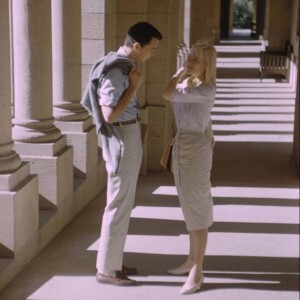
Ivy Style, otherwise known as Ivy League, is a style of men’s dress that became mainstream at Ivy League schools during the 1950’s. Students started wearing casual versions of the traditional menswear staples worn by their fathers and started wearing clothing originally designed for recreational activities outside of sports fields. On this week’s episode Joseph and Nathan delineate various Ivy Style staples and talk about several groups that adopted the look: Jews who dressed Ivy in order to blend in in professional environments, female students at the Seven Sisters schools who dressed Ivy in a strikingly masculine way, and Black civil rights activists who dressed Ivy in order to persuade White Americans that they were equals. The boys then round off the episode by critiquing the Ivy League as an institution.
Links:
Ivy League Pinterest Board
The Ivy Style Primer
American Ivy: Chapter 1 - Articles of Interest
Take Ivy by Hayashida, Teruyoshi
The Weird and Glorious Culture Shock of “Take Ivy”
Kiel James Patrick’s Instagram
Man fired for being ‘too American,’ old, wearing khakis: EEOC complaint
Visual snow syndrome grid pattern post
What is Black Ivy, and why you've never heard of it
The Zoomer Question by Isaac Wilks
Air rage triggered by walking past first-class seating, study says
Liquidated: An Ethnography of Wall Street by Karen Ho
Pete Buttigieg McKinsey tweet
Artwork:
Sunday in the Ivy League from Take Ivy
Recorded on 7/15/2024
Jul 16, 2024
Jul 16, 2024
2 hr 4 min
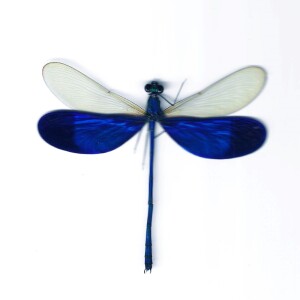
This week Joseph and Nathan are joined by Marissa Macias, a local artist and fashion designer who owns the insect-inspired clothing brand Petrichor, to discuss insect aesthetics. They begin by examining 7 of the ~30 extant insect orders: hymenoptera (ants, bees, wasps), odonata (dragonflies), coleoptera (beetles), orthoptera (grasshoppers, crickets), mantodea (mantids), lepidoptera (butterflies, moths), and heteroptera (true bugs). Amongst other things they discuss Chicago’s recent dual cicada brood emergence, how insects appeared in pre-modern still lives because of their association with death, and how decline in insect biomass could result in systems collapse and a sixth extinction.
Links:
https://www.petrich0r.com/ (online shop)
Petrichor (Instagram)
Marissa’s Neurobasis Kaupi Are.na Channel
Maria Sibylla Merian
The Insect Asylum
Cicada Parade-a
Carravagio’s Basket of Fruit
Durer’s Stag Beetle
Eating Bugs to Save the Planet by Dana Goodyear
The Collapse of Insects By Julia Janicki, Gloria Dickie, Simon Scarr and Jitesh Chowdhury
Earth Is Not in the Midst of a Sixth Mass Extinction by Peter Brannen
Ocean Trash Is a Lifesaver for Insects by Daniel Strain
Artwork:
Neurobasis Kaupi by Marissa Macias
Recorded on 7/10/2024

Sebastien & Nathan
Sebastien (left) grew up in Buffalo and is a photographer. Nathan (right) grew up in Chicago and is a librarian.
Contact Silent Generation LLC with any questions or suggestions at:
silentgeneration.chi@gmail.com