Silent Generation
Silent Generation is a Chicago-based cultural analysis podcast that surveys the cultural consequences of car-oriented development in the mid-20th century. It explores what was lost between the Silent Generation and Generation Z. Topics discussed include aesthetics, fashion, history, and urbanism.
Find us on Instagram: silent.generation










Episodes
![Ep. 31: Health Goth [TEASER]](https://pbcdn1.podbean.com/imglogo/ep-logo/pbblog17628020/Health_Goth_3y4ar9_300x300.jpg)
Jul 3, 2024
Jul 3, 2024
5 min
Full episode available on Patreon: https://www.patreon.com/SilentGeneration
Originally started as a Facebook page by three Portland natives, health goth was an online internet aesthetic that proliferated from 2013 to 2015. Health goth imagery and fashion incorporated monochrome color schemes, performance wear brands (particularly Nike, Adidas, and Y-3), chav culture, light weaponry, face masks, and fitness culture. Where did it go, and why has it been erased from public memory to a greater degree than other early Tumblr aesthetics? On this week's episode the boys explore how the aesthetic was later commandeered and mishandled by the controversial former Chicago club kid Johnny Love. Amongst other things they discuss how the aesthetic side of Tumblr often made them feel “Tumblr fatigue,” how local DIY scenes are a recipe for drama and GoFundMe disasters, how goth clean girl looks eerily reminiscent to health goth, and how phonk seems to be health goth music incarnate.
Links:
Health Goth Pinterest Board
Health Goth Facebook Page
healthgoth.com
Cottweiler: 2014 S/S Collection
What Health Goth Actually Means by Adam Harper
Health Goth Fitness Manifesto
#HealthGoth - Hashtags Season II by Red Bull Music Academy
execussion.tumblr.com 2012 by Celestial Youth
Is the Health Goth Movement Selling Out to the Mainstream?
meme about scene rants
famous 2012 basement group photo w/ Johnny Love
Johny Love’s recent health goth facebook post
The DigiFairy’s goth clean girl Instagram reel
Phonk Aesthetics
Artwork:
Jazzelle Zaughnatti wearing a Dead Worldwide shirt
Recorded on 6/30/2024
Jun 27, 2024
Jun 27, 2024
1 hr 31 min
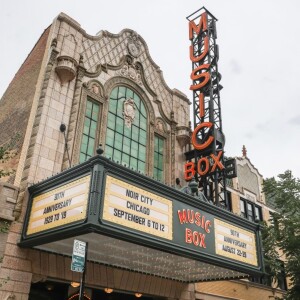
While many recent episodes of Silent Generation have focused on decline, this episode explores how movie theaters have had multiple golden eras. Vaudeville theaters, nickelodeons, movie theaters, drive-ins, and multiplexes have each offered unique ways for moviegoers to enjoy films. Joseph and Nathan begin by discussing the history of movie theaters before examining four iconic movie palaces in Chicago: The Garrick Theater, The Chicago Theater, The Music Box, and the Ramova Theater. Amongst other things they discuss how movie studios used to bundle blockbusters and B-movies together in a now illegal practice called “block booking,” how the stars in the ceiling of The Music Box theater remind them of Grand Central Station, how modern movie theaters have an Art Deco-esque aesthetic that is called Decoplex, and how Alamo Drafthouse Cinema workers are unionizing.
Links:
Downtown Chicago’s Historic Movie Theaters by Schiecke, Konrad
Avondale Time Machine posts about movie theaters in Avondale
All Extant Louis Sullivan Buildings in Chicago
The Last American Possession screening at the Music Box on July 24th
CTA Bus Hit, Damaged Ramova Theatre Days After Building Earned Initial Landmark Status
Alamo Drafthouse Made Millions. Exhausted Workers Said Enough
Artwork:
The Music Box
Recorded on 6/23/2023
Jun 22, 2024
Jun 22, 2024
1 hr 32 min
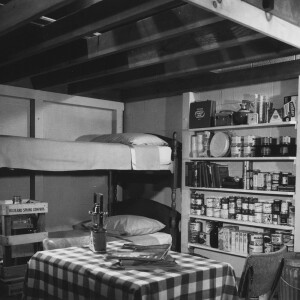
In response to the Berlin Crisis of 1961, President John F. Kennedy chose to encourage everyday Americans to construct homemade bunkers. Civilians could suddenly mitigate their fears of a nuclear holocaust through consumption, and thus prepper culture was born. This week the boys are joined by the writer and community builder Anna Savina to discuss preppers, survivalists, and other groups that have doomsday inspired “exit strategies.” They begin by examining the zine she created on bunkers, Bunker Mentality, to explain how bunkers fit into the story of how Americans shifted from being citizens to being consumers. Amongst other things they discuss how the towers that existed in medieval Italian cities were an early form of bunkers, how prepper culture seems to thrive in the interior of the United States rather than the coasts, and how the prepper aesthetics depicted in Hideo Kojima’s Death Stranding were beautiful but ultimately not representative of prepper culture.
Links:
Prepper Aesthetics Pinterest Board
Anya is Typing…
Anna Savina's Zine on bunkers: Bunker Mentality
Anna Savina’s Twitter
Prepper Lingo: Terms, Slang, and Acronyms from A-Z
Towers of Bologna, Italy in the 12th Century
San Gimignano
Preppers in Death Stranding
New Survivalism by Parsons & Charlesworth, The Object Guardian
Conservative guy afraid of cities meme
Why We Love the Apocalypse - EP183 by The Casual Preppers Podcast
Wikipedia Database download
Graph of the Population of Rome Through History
Artwork:
How to build a fallout shelter, 1957
Creative Commons CC0 License
Recorded on 6/19/2024
![Ep. 28: Fast Food Culture w/ Mathieu [TEASER]](https://pbcdn1.podbean.com/imglogo/ep-logo/pbblog17628020/Fast_Food_Culture_1_j6b5ib_300x300.jpg)
Jun 12, 2024
Jun 12, 2024
5 min
Full episode available on Patreon: https://www.patreon.com/SilentGeneration
Many themes thus far discussed on Silent Generation are present in fast food culture: car-centrism, postwar decline, Americanism, and uniforms. This week the boys are joined by Mathieu (who goes by Sleepy on Discord) to talk about McDonald’s, CosMc’s, Taco Bell, In-N-Out Burger, Wendy’s, and Culver’s in detail. Chicago has four (in)famous McDonald’s locations that they pay particular attention to: Rock 'n' Roll McDonald's, CrackDonald’s, Jungle McDonald’s, and the McDonald's Global Menu Restaurant. Amongst other things they discuss the decline of fast food architecture from its Googie architecture highs, chains that are holding on for dear life like KewPee Hamburgers and Quizno’s, and their favorite discontinued menu items.
Links:
White Castle #16
Googie 101: A Space-Age Pop-Architecture Primer
Tokyo Toni 80 Pieces of Chicken
McDonald’s Broke My Heart from Malcolm Gladwell’s Revisionist History Podcast
Rock N Roll McDonalds by Wesley Willis
Why McDonald’s looks sleek and boring now
Nonstandard McDonalds
The site of the former “jungle Mcdonald’s” on Google Maps
The rise and fall of Wendy’s sun rooms
Breaking Points: We Were TRICKED By Red Lobster Endless Shrimp Excuse!
What Happened To Chipotle?
Artwork:
Art Deco McDonald’s from Nonstandard McDonald’s
Clifton Hill, Melbourne, Australia
Recorded on 6/9/2024
Jun 4, 2024
Jun 4, 2024
1 hr 39 min
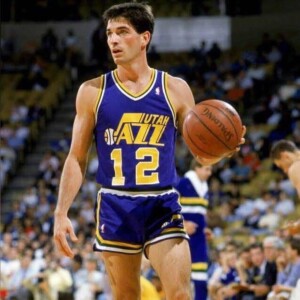
On this week’s episode Joseph and Nathan examine sportswear worn by both athletes and their fans. Episode 14 of Silent Generation already covered Olympic sports, so this week’s episode focuses on major league sports. They cover each of the following: baseball, basketball, football, golf, hockey, and soccer (plus rugby, road cycling, and tennis for good measure). Amongst other things they discuss how White Sox players briefly wore shorts in the 1970s, how rappers popularized hockey jerseys in the 1990s, how cyclists were depicted in The Triplets of Belleville, and how coaches (like Tom Landry and Pat Riley) dressed better prior to league-wide contracts.
Links:
Sportswear Pinterest Board
American Apparel’s Poly Mesh Football Jersey
Gay baseball raglan meme 1, Gay baseball raglan meme 2
How Hockey Jerseys Became Standard Wear for Fans
When a Sweater Defined One of the Best Rivalries
The Rise Of Athleisure In The Fashion Industry And What It Means For Brands
Artwork:
John Stockton
Recorded on 6/2/2024
May 29, 2024
May 29, 2024
2 hr 5 min
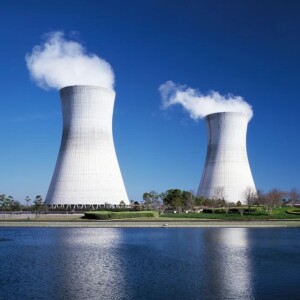
Why has the general public been skeptical of nuclear energy, seemingly even before the technology existed? Joining the boys on this week’s episode of Silent Generation is Madison Hilly, founder and director of the Campaign for a Green Nuclear Deal, to discuss how the discourse around nuclear energy has been heavily influenced by its depictions in popular culture. They examine The China Syndrome, The Simpsons, Teenage Mutant Ninja Turtles, and Chernobyl (2019) to examine how erroneous depictions of nuclear waste and nuclear meltdowns have fomented fear. Amongst other things they talk about when Madi went viral for taking a picture next to nuclear waste while pregnant, how the baby boomer strain of environmentalism leans more “conservationist,” why nuclear waste and slime in childrens’ media is always depicted as being green, and how left wing opposition to nuclear energy seems to come from subconscious fears that radioactive material isn’t “natural.”
Links:
The Campaign for a Green Nuclear Deal
Madison Hilly’s Twitter
Pregnant Woman Poses With 'Nuclear Waste' To Prove Point About Radiation (Newsweek)
By the Waters of Babylon by Stephen Vincent Benét
Cornelia Hesse-Honegger’s Mutations
Science Behind Science Fiction: How do Teenage Turtles become Mutant Ninjas?
Studies Show That, As We Age, Our Ability To See Vivid Colors Decline
Holtec reports “remarkable progress” towards restart of Palisades
Artwork:
Nuclear power plant LCCN, Library of Congress's Prints and Photographs division
digital ID highsm.13019, CC0
Recorded on 5/26/2024
![Ep. 25: Moral Codes [TEASER]](https://pbcdn1.podbean.com/imglogo/ep-logo/pbblog17628020/La_scuola_di_Atene_pchm3e_300x300.jpg)
May 21, 2024
May 21, 2024
4 min
Full episode available on Patreon: https://www.patreon.com/SilentGeneration
Many parents today tell their children to simply “be a good person” and do not offer them moral guidelines beyond that. “Being a good person” isn’t a robust enough moral framework to deal with the complexities of everyday life, so many people resort to creating their own moral codes (either completely independently, or through the help of internet gurus like Jordan Peterson). On this week’s episode of Silent Generation, Nathan and Joseph reflect on their own moral codes and talk about the origins and justifications of the rules they’ve made for themselves. Amongst other things they discuss how gay culture doesn’t offer gay men a moral framework, how you should aim to be contrarian only 50% of the time, how the public has become tired of plotlines that deal with moral gray areas, and how modern Hollywood has only offered the public antiheroes in place of actual heroes.
Links:
Jordan Peterson - Are You a Good Person?
The Epidemic of Gay Loneliness
Artwork:
The School of Athens by Raphael
Recorded on 5/19/2024
May 13, 2024
May 13, 2024
1 hr 3 min
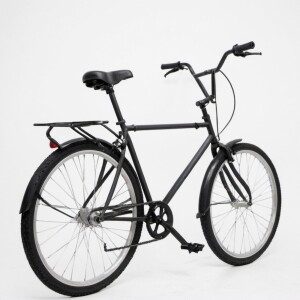
As previously noted, Nathan has a general aversion to bikes and bike infrastructure. But where does his “bike skepticism” come from, and why do many other Americans feel the same way? On this week’s episode of Silent Generation Joseph gets to the root of Nathan’s bias (the temperament of cyclists, tacky bike lane infrastructure, and the “aesthetics of control”) and makes the case for bike-oriented cities. Amongst other things they discuss how most Americans approach biking from a sports angle, the way streets were shared by multiple transit modes in the early 20th century, how biking becomes less viable in the Winter, and how Los Angeles has the potential to become America’s foremost biking city.
Links:
The new Silent Generation Patreon!
San Francisco streetcar footage from a hundred years ago
Years and Years by Russell T Davies
On Adam Levine's tattoos
Why Many Cities Suck (and Los Angeles Doesn't Have to)
Strong Town’s idea of “complex vs. complicated”
Artwork:
AI generated
Recorded on 5/12/2024
May 8, 2024
May 8, 2024
1 hr 29 min
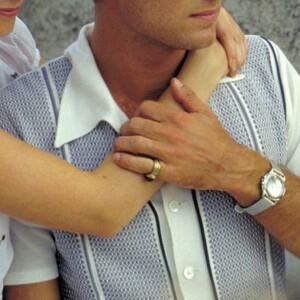
In Western culture men often wear little to no jewelry, often opting to only wear a wedding ring and/ or a watch. What meaning can be discerned from the jewelry that Western men do wear and why don’t they wear more? On this week’s episode of Silent Generation the boys begin by discussing the form and function of the types of jewelry men most commonly wear: rings, cufflinks, tie pins, watches, necklaces, and belt buckles. Amongst other things they discuss the popularity of pearl jewelry amongst male queerbaiters, when men’s jewelry becomes a red flag, why wearable tech lost its potential to be considered jewelry, Nathan’s time working in the jewelry industry, and how millennial pink was a stepping stone into alternative fashion for preppy people in the late 2010s.
Links:
Rings & Their Meaning by Gentleman’s Gazette
Fran Lebowitz wearing Calder cufflinks in Scorsese’s “Pretend It’s a City”
how’d you know im uncut meme
“I got court” starterpack meme
Artwork:
Screenshot from The Talented Mr. Ripley
Recorded on 5/5/2024

May 1, 2024
May 1, 2024
1 hr 33 min
On this week’s first ever sequel episode the boys are joined by Shan Beaste, best known by her stage name Zombelle, who was one of the co-creators of the Seapunk movement and aesthetic. As detailed in episode 12, Seapunk (2011-2014) was a ‘90s inspired aquatic subculture that Nathan participated in during high school. Zombelle recently re-released her seminal seapunk album Tropicult (remastered by Myrrhkaba) which fortuitously led to her and Nathan connecting over Instagram and spurred this week’s episode. In this reexploration of seapunk, Shan and the boys discuss Shan’s early musical history and life story, confirm that she coined the term slimepunk, reiterate the place of mermaids in seapunk culture, attribute the idea of the “internet subculture formula” to Zombelle, and speculate what second wave seapunk (or “seapunk 2”) could look like.
Any former (or current) seapunk listeners are encouraged by Shan to send testimonials, photographs, or other ephemera from Seapunk’s existence to seapunkpreservationsociety@gmail.com for an impending book she is writing on seapunk’s history!
Links:
Zombelle’s SoundCloud
Zombelle’s Instagram
Zombelle’s Seapunk Spotify playlist
The Mainframe.im Instagram page
The seapunk Wikipedia article
Don't Call It #Tumblrwave
The Complete CORAL RECORDS INTERNAZIONALE catalog from archive.org
Random Aesthetic Generator
New miracle weight loss drug! by Praefoco21
Artwork:
Provided by Zombelle
Intro song:
Bad Creation by Zombelle
Recorded on 4/28/2024

Sebastien & Nathan
Sebastien (left) grew up in Buffalo and is a photographer. Nathan (right) grew up in Chicago and is a librarian.
Contact Silent Generation LLC with any questions or suggestions at:
silentgeneration.chi@gmail.com