Silent Generation
Silent Generation is a Chicago-based cultural analysis podcast that surveys the cultural consequences of car-oriented development in the mid-20th century. It explores what was lost between the Silent Generation and Generation Z. Topics discussed include aesthetics, fashion, history, and urbanism.
Find us on Instagram: silent.generation










Episodes

Apr 7, 2026
Apr 7, 2026
58 min
Pictureplane, real name Travis Egedy, is a musician, artist, and fashion designer who popularized the term “witch house” in a 2009 interview with Pitchfork Magazine. In this follow up episode to Ep. 89: Witch House, Nathan and Breanna interview Pictureplane about his contributions to witch house and his involvement with early internet aesthetics as a whole. They ask him about what his Myspace page looked like, how he got to know Zombelle, and how the music video for Goth Star got filmed. The episode concludes with a discussion of Pictureplane’s most recent album, Sex Distortion.
Links:
Pictureplane - Instagram Page
https://pictureplane.bandcamp.com/
https://shop.alienbody.com/
Real Is A Feeling by Pictureplane
Gothstar by Pictureplane
Glowing Wounds by Pictureplane
Sex Distortion (Spectral Passion) by Pictureplane
Heaven is a State of Mind by Pictureplane
RE/Search Publications
Industrial Culture Handbook
Runaway Today
Bukake is a Feeling by Zombelle
2011 Chicago Tumblr basement photo
greeknewmediashit
Photorhabdus luminescens (Angel’s glow)
Artwork:
Pictureplane on His Haunting New Album and His Favorite Horror Imagery by Tobias Carroll
Recorded on 1/7/2026

Mar 30, 2026
Mar 30, 2026
1 hr 56 sec
“Rockabilly” is a portmanteau of the words “rock” and “hillbilly” that originally described a subgenre of rock and roll music in the 1950s. This week’s episode of Silent Generation focuses on the rockabilly subculture: a modern interpretation of rockabilly that combines 1950s nostalgia with alternative staples like hair dye, piercings, and tattoos. Nathan and Sebastien start out by discussing traditional rockabilly music that was popularized by the likes of Elvis Presley, Janis Martin, and Wanda Jackson. The two then theorize why people are drawn to the rockabilly subculture and identify what characteristics they share. They then detail rockabilly fashion before concluding with a discussion about rockabilly values and whether or not those values still feel transgressive.
Links:
Rockabillies Pinterest board: https://www.pinterest.com/silentgeneration/rockabillies/
The Best of Rockabilly Playlist
Bang Bang by Janis Martin
Fujiyama Mama by Wanda Jackson
Rockabilly - Aesthetics Wiki Page
Rockabilly resurgence: A rocking revival in the 90s by 034zakia.bessaa2008
What Is Rockabilly Style? Everything You Wanted To Know by Bonnie
It's a Rockabilly World (2016)
Guys Episode 37 - Rockabilly Guys with Brace Belden
Reviving the 1950s - Exploring Tokyo’s Rockabilly Culture by Melanie Gelo
Nothing to Worry About by Peter Bjorn and John
Viva Las Vegas
VLV 25 Car Show
LisaTV @ the Rockabilly Convention
Rockabilly Duo: Your Scene Sucks
Child of Rockabilly Couple Constantly Wondering What the Fuck Is Going On by Keith Buckley
Drake Bell Made a Rockabilly Album?
r/Rockabilly
Is Rockabilly alive and well or is it a dying culture?
”Rockabilly” on Google Trends
Ep. 68: Historical Dressing & Reenactment
Artwork:
Viva Las Vegas - Gallery
Recorded on 3/23/2026

Mar 23, 2026
Mar 23, 2026
1 hr 20 min
Art Deco is an art and design style relevant from the 1920s to 1930s that is best characterized by its use of metallic colors, geometric patterns, futuristic forms, and references to ancient civilizations. It is the most celebrated of all of the design styles that can be grouped under Interwar Modernism, but what makes it so popular? On this week’s episode of Silent Generation, Nathan and Sebastien begin by charting Art Deco’s emergence in France to its eventual dissemination at the 1925 International Exhibition of Modern Decorative and Industrial Arts in Paris. They then detail two Art Deco skyscrapers (the Carbide & Carbon Building and the Guardian Building) before delving into a conversation about Art Deco and American identity. The episode rounds out with an analysis of Art Deco in three pieces of media: Bioshock (2007), Nightmare Alley (2021), and Metropolis (1927).
Links:
Art Deco Pinterest board: https://www.pinterest.com/silentgeneration/art-deco/
Art Deco of the 20s and 30s by Bevis Hillier (1968)
Art Deco Architecture: Everything You Need to Know as the Style Turns 100 by By Katherine McLaughlin and Elizabeth Stamp
Art Deco: Everything You Wanted to Know
Ep. 110: Consumer Aesthetics Research Podcast w/ Evan Collins
A History - Vienna Secession
Secession Building
Stoclet Palace
Carbide and Carbon Building
The History of The Guardian Building: An Art Deco Landmark
Lobby murals at Buffalo City Hall
Sen̓áḵw
Bioshock (2007)
Nightmare Alley (2021)
Metropolis (1927)
North & Pulaski
Artwork:
The "Spirit of Light" sculpture on the Niagara Mohawk Building in Syracuse, NY
Recorded on 3/16/2026

Mar 16, 2026
Mar 16, 2026
1 hr 10 min
On this week’s episode of Silent Generation, Nathan and Sebastien explore the early development of skyscrapers in Chicago, beginning with the construction of the Home Insurance Building in 1885. They note that nine early Chicago skyscrapers have been nominated for UNESCO World Heritage Site status and examine two in depth: the Monadnock Building and the Auditorium Building. The episode also traces the life of Louis Sullivan, whose tripartite theory shaped skyscraper design for generations. Finally, they examine several early skyscrapers in Sebastien’s hometown of Buffalo, New York (the Guaranty Building, the Ellicott Square Building, and the Dun Building) before debating the extent to which skyscrapers are monuments to capital.
Links:
Skyscraper | Encyclopedia Britannica
Early Chicago Skyscrapers (UNESCO)
The Monadnock’s original Egyptian Revival facade
The Chicago Auditorium, an Architectural Pride
Center for New Deal Studies
The World's Tallest buildings in 1930
It looks like a fairy tale city, perhaps the Emerald City or smth like that [Historical photo of the Chicago Loop]
Artwork:
Guaranty Building, 1895 Church and Pearl Streets, Buffalo (NY, USA). Dankmar Adler et Louis Sullivan, architectes. © Wayne Andrews / Esto
Recorded on 3/2/2026
Mar 16, 2026
Mar 16, 2026
10 min
In this special announcement, Nathan welcomes Sebastien as the newest cohost of Silent Generation! Nathan begins by noting that Sebastien will be the main cohost until Breanna officially moves to Chicago. Nathan then interviews Sebastien about his background (his life in Buffalo, his passion for photography, and his interest in urbanism) before outlining the future of Silent Generation.
Links:
Sebastien’s Instagram
sebastienbowen.com
Artwork:
Photographed by Katie
Recorded on 3/2/2026

Mar 12, 2026
Mar 12, 2026
1 hr 21 min
On this week’s episode of Silent Generation, Nathan and Breanna begin by discussing how fine dining transitioned from an activity enjoyed at home to an activity enjoyed at restaurants. They then survey primary figures in the world of fine dining (A. Boulanger, Marie-Antoine Careme, Eugénie Brazier, Ferran Adria, Rene Redzepi, Joel Robuchon, and Gordon Ramsey) before discussing the pillars of fine dining. The two then detail the history of the Michelin Guide before reflecting on their recent dining experience at a restaurant in Dallas that was awarded one Michelin star, Mamani. The episode concludes with a discussion about where they want to see fine dining go moving forward.
Links:
Origins of the Restaurant
Boulanger and the restaurant: the snowballing of a myth
Eugénie Brazier: The legendary 'mother of French cuisine' by Anna Richards
Bazaar Classics: Liquid Olives
What Is Molecular Gastronomy!?
The MICHELIN Guide 101
What Is The MICHELIN Bib Gourmand Award?
Eating at Alinea. Chicago. 3 Michelin Stars. An Amazing 9 Course $345 Tasting Menu
Culinary Theatre at Alinea in Chicago | World's Best Restaurants | Our Taste
Chef’s Table - Season 2 Episode 1 (2016)
Jiro Dreams of Sushi (2011)
American Psycho, Fine Dining, and Scams
VSauce - Molecular Gastronomy
Artwork:
Etrusca restaurant in San Francisco
from Restaurants in California (Restaurant Design 3) (1993)
Recorded on 2/15/2026

Feb 16, 2026
Feb 16, 2026
1 hr 15 min
On this week’s episode of Silent Generation, Nathan and Breanna discuss all things dinner parties. The two begin by discussing what they like about dinner parties and their personal experiences hosting and attending them. They then review common features of traditional dinner parties (cocktail hour, place settings, multiple course meals, and after-dinner entertainment) before detailing how they have changed over time. Amongst other things they discuss how Emily Post and Martha Stewart presented competing visions of the high-effort dinner party, how the depreciation of dining-related antiques demonstrates the decline of dinner parties in America, and how modern dinner parties emphasize a relaxed approach that is best demonstrated by Allison Roman’s Nothing Fancy.
Links:
Etiquette in Society, in Business, in Politics, and at Home by Emily Post
How Dinner Parties Became the Fuzzy Blanket of Adulthood by Alissa Wilkinson
The Dinners That Shaped History by Brenda Wineapple
Eating Together : Food, Friendship and Inequality Alice P. Julier
The Pleasure of Your Company (but No Gaucheries, Please!): Dinner Parties in 19th-Century America by mansionmusings
Entirely Entertaining: Dishing Dinner Party Trends Through the Decades
I Tracked Down The Company Ruining Restaurants
The Art of Entertaining
Why Dinner Parties Still Matter
Entertaining by Martha Stewart
Martha (2024)
Martha Stewart wheelbarrow clip
The Exterminating Angel (1962)
The Discreet Charm of the Bourgeoisie (1972)
Fantastic Mr. Fox (2009)
Why the dinner party is a declining art by Harmeet Kaur
Politics on the menu in Seoul as Donald Trump dines on shrimp from disputed waters and 360-year-old soy sauce by Nicola Smith
Cameron praises Obama at lavish state dinner by Mark Madell
Presidents at State Dinners: A Historical Overview
Nothing Fancy by Allison Roman
Alison Roman’s “Nothing Fancy” and the Art of the Unpretentious Dinner Party by Michele Moses
With 'Nothing Fancy,' Alison Roman Aims To Rebrand Having People Over For Dinner by Wynne Davis
Artwork:
Charlie Chaplin, Buster Keaton (and others) at a party given for Rudolph Valentino
Recorded on 02/08/2026

Feb 10, 2026
Feb 10, 2026
1 hr 19 min
Soft Colonial Wanderlust is a Victorian-inspired consumer aesthetic that was popular from the late 1980s to mid 2010s. It consists of black and white photographs, hand-colored photographs, antiquated technology, chinoiserie, japonisme, and general orientalism. Nathan and Breanna detail the aesthetic in this week’s episode of Silent Generation, from its murky origins in ‘60s/‘70s British animation to its eventual identification by CARI in 2017. They discuss how Twee is the “girl version” of Soft Colonial Wanderlust, how hand-colored photographs serve as the foundation for the aesthetic’s color scheme, and how Soft Colonial Wanderlust differentiates itself from Steampunk by eschewing digital technology.
Links:Soft Colonial Wanderlust Pinterest Board: https://www.pinterest.com/silentgeneration/soft-colonial-wanderlust/Soft Colonial Wanderlust CARI PageSoft Colonial Wanderlust Aesthetics Wiki PageWhat is Soft Colonialist Wanderlust? Facebook GroupSoft Colonialist Wanderlust Are.na Pagehttps://anemptyblissbeyondthisworld.neocities.org/CARI/soft-colonialThe surprising evolution of hipsters in the 2000sThe Mysterious Geographic Explorations Of Jasper Morello
Artwork:Hendrick's Gin "Escape"
Recorded on 01/31/2026

Feb 10, 2026
Feb 10, 2026
16 min
In this special announcement, Nathan welcomes Breanna as the newest cohost of Silent Generation! The two kick things off by reflecting on their time in Dallas and the activities they shared the day before. Nathan then interviews Breanna about her background (who she is, where she has lived, and what lenses she uses for cultural analysis) before outlining the future of Silent Generation.
Links:Breanna’s InstagramLabyrinth of ArtBreanna’s TikTokBreanna’s Letterboxd
Artwork:Photograph by Studio Solaire
Recorded on 01/31/2026

Dec 8, 2025
Dec 8, 2025
4 min
In this important announcement, Joseph shares his plans to leave Silent Generation and Nathan shares his plans to continue it. The podcast will relaunch in two to three months with a new co-host that is familiar to the community. Nathan also shares that he is open to adding other regular contributors, and that a Discord member named Juniper is going to make a commemorative zine for the first iteration of the podcast.
Links:
Nathan’s Instagram: https://www.instagram.com/nathan_knize/
Silent Generation’s Instagram: https://www.instagram.com/silent.generation/
Recorded on 12/3/2025

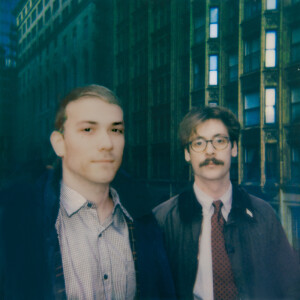
Sebastien & Nathan
Sebastien (left) grew up in Buffalo and is a photographer. Nathan (right) grew up in Chicago and is a librarian.
Contact Silent Generation LLC with any questions or suggestions at:
silentgeneration.chi@gmail.com